



September 19, 2023 |
GSAM Featured Insights


In The Spotlight
In The Spotlight
In The Spotlight
Stay on top of the latest market developments, key themes, and investment ideas affecting your portfolio and practices.
Explore how we can help you
Contact UsOctober 30, 2023 | 8 Minute Read
Industry Associations Request DOL Delay Implementation of Roth Catch-Up Contributions
ESG Legislative Update
House Republicans introduced four bills that would generally seek to restrict Environmental, Social, and Governance (ESG) factors when selecting retirement plan investments.
IRS Provides Tax Relief for Hawaii Wildfire Victims
The IRS has indicated that individuals affected by the Hawaiian wildfires may be eligible for distributions not subject to the 10% early distribution tax and may be eligible to make hardship withdrawals. Each plan has its own rules and guidance for participants to follow.
DOL Sends New Fiduciary Rule Proposal to OMB
The Department of Labor sent a new investment advice fiduciary rule proposal to the Office of Management and Budget.
Most new litigation continues to focus on alleged imprudent investments and recordkeeping fees and underperformance. However, two new cases challenge the prudence of proprietary funds and two new cases allege that plan sponsors must use forfeited non-vested employer contributions to 401(k) plans to defray plan expenses.
Multiple lawsuits were filed naming the provider of the MOVEit file transfer software, as well as retirement service and insurance providers, as defendants, alleging that the personally identifiable information of millions of customers was exposed in a data breach.
A number of dismissals took place at the district court level, including three cases challenging BlackRock target date funds (Wintrust Fin. Corp., Cisco Sys., Inc., and Marsh & McLennan Cos., Inc.) though in a fourth case the court largely denied the motion to dismiss Genworth Financial Inc.
Source: Goldman Sachs Asset Management. As of October 2023. Goldman Sachs does not provide accounting, tax or legal advice. Please see additional disclosures at the end of this document. Any reference to a specific company or security does not constitute a recommendation to buy, sell, hold or directly invest in the company or its securities.
“Everything should be made as simple as possible, but no simpler,” said Albert Einstein. What does this mean for retirement income when according to Nobel Prize winner William Sharpe, spending down assets in retirement is the “nastiest, hardest problem in finance?”
Retirement income is a top concern among retirees, but it is also a challenge for plan sponsors to provide a range of products and services to make their plan a retirement destination for a diverse mix of retirees. Many plan sponsors acknowledge the desire to keep plan participants in-plan through retirement, though many may lack the plan features to attract retirees.
From our 2023 Retirement Survey & Insights Report1, retirees responded that, while employer-sponsored retirement plans were a top source of education and advice pre-retirement, in retirement these plans dropped considerably to sixth, raising questions about what plan enhancements may be needed to change this view.
In this In Focus section, we aim to help plan sponsors address several key questions: How can plan sponsors make their plans a destination for retirees to manage their retirement income? Which plan features are most helpful and most desired by participants? Where might plan sponsors consider starting?
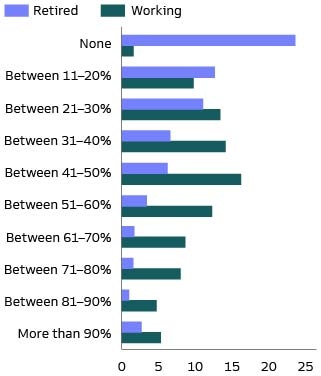
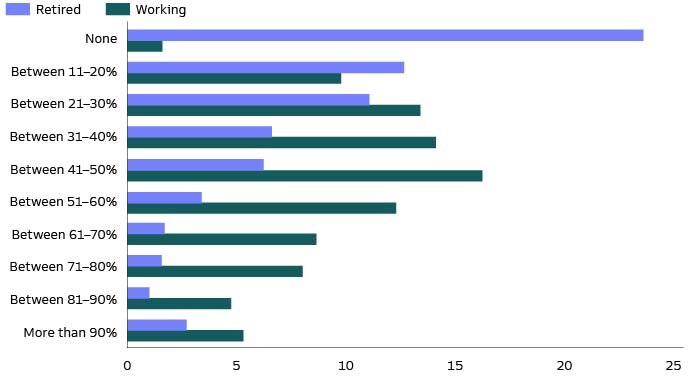
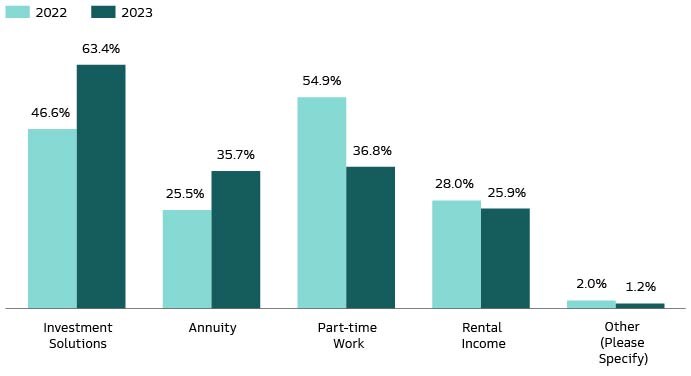
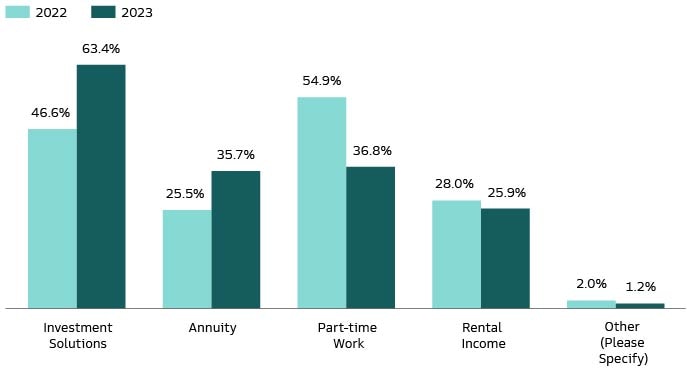
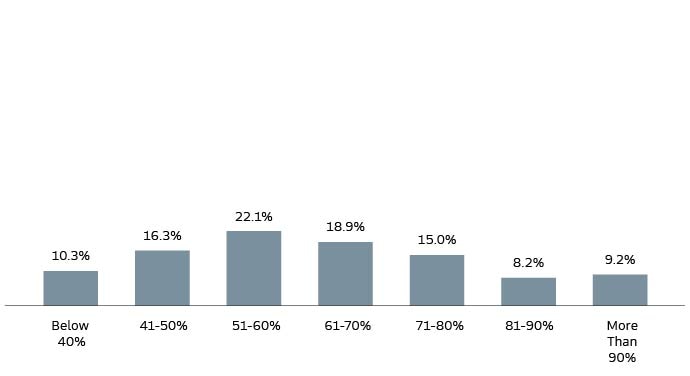
Reliance on personal savings expected to increase significantly.
Source: 2023 Goldman Sachs Asset Management Retirement Survey & Insights Report. Views represent those of survey respondents. Results compiled in August 2023. As of October 2023.
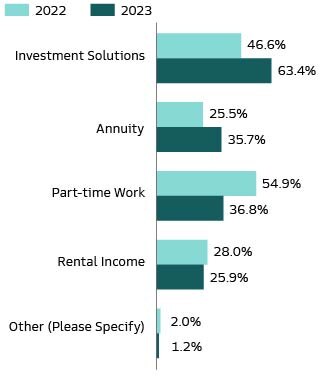
In our 2023 Annual Retirement Survey and Insights Report, we analyzed the plan design features that working respondents stated they would want in order to keep their retirement savings in a 401(k) plan post-employment. We also incorporated responses from retired respondents to highlight how the two groups’ preferences differ.
When compared with a wide variety of plan enhancements, working respondents highlighted the following top features they’d want to keep their savings in-plan post-employment:
The majority of working respondents prefer investment income.
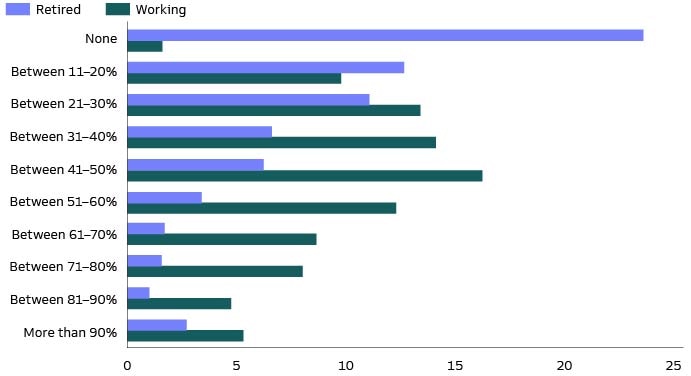
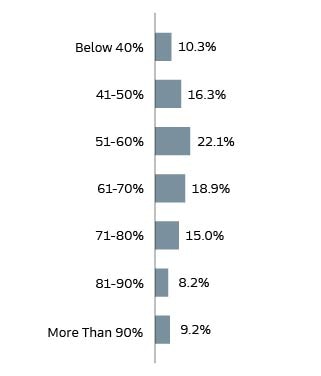
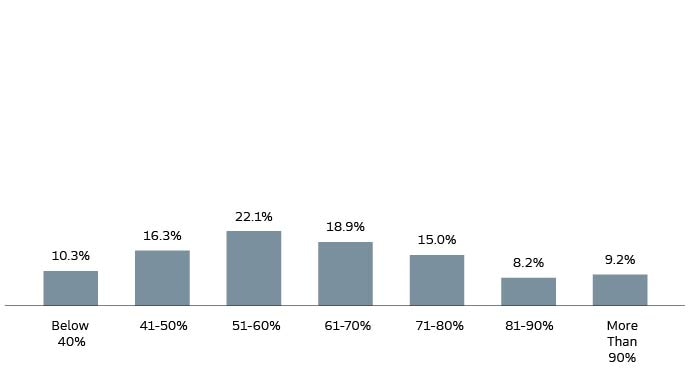
Our survey results show that most working respondents prefer a meaningful amount of guaranteed income as part of their retirement income strategy.
Source: 2023 Goldman Sachs Asset Management Retirement Survey & Insights Report. Views represent those of survey respondents. Results compiled in August 2023.
When evaluating retirement tier enhancements, we believe it is important to consider those plan participants who are most vulnerable to having a retirement income shortfall, such as those having the lowest savings. These participant segments have unique needs, which may be key factors in plan design.
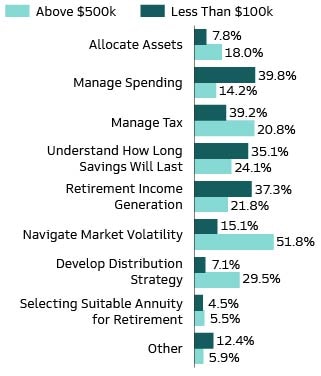
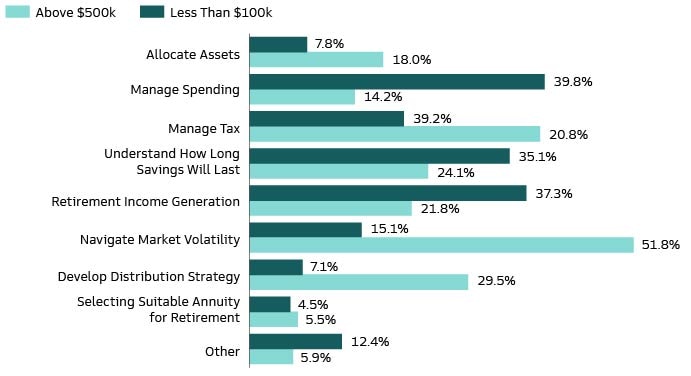
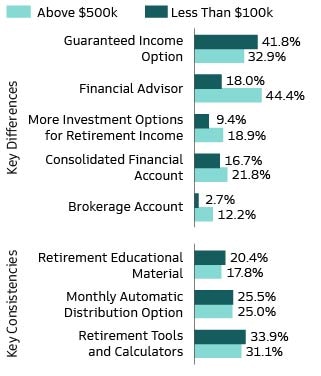
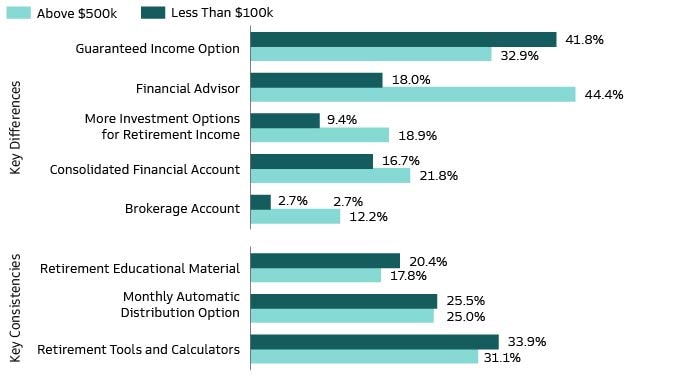
From our survey results, we identified key differences in retirement saving approaches among different household asset levels. Households with less than $100,000 in assets tend to have less retirement savings, are less financially literate, are less inclined to use professional advice, and are more likely to self-manage savings / income. On the other hand, households with greater than $500,000 in assets tend to have higher retirement savings, are more financially literate, are more likely to use professional advice, and are more likely to work with an advisor.
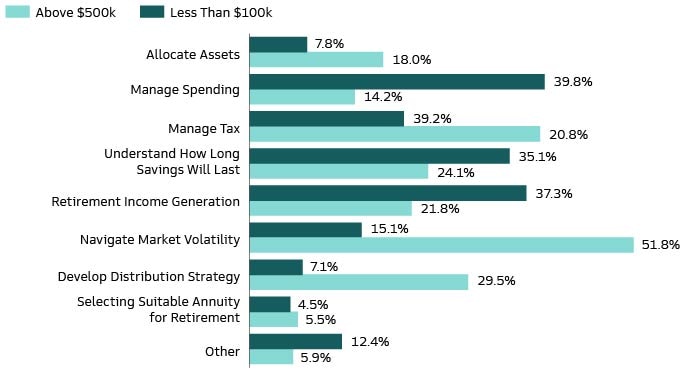
We found that lower prepared individuals need support in tracking and managing spending, generating guaranteed income, and understanding how long savings will last. On the other hand, higher prepared individuals need support in navigating through market volatility, managing taxes, and developing a sustainable distribution strategy.
Source: 2023 Goldman Sachs Asset Management Retirement Survey & Insights Report. Views represent those of survey respondents. Results compiled in August 2023. As of October 2023. Goldman Sachs does not provide accounting, tax or legal advice. Please see additional disclosures at the end of this presentation.
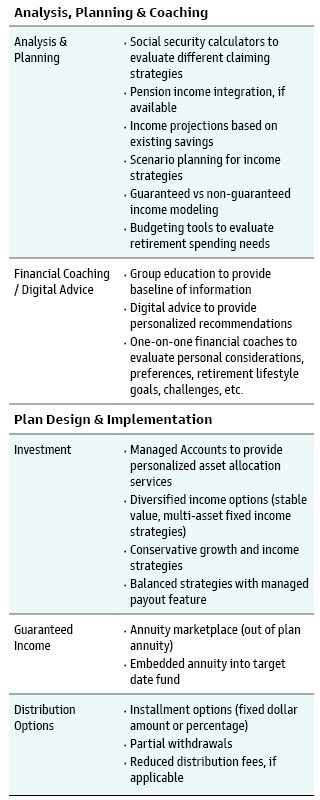
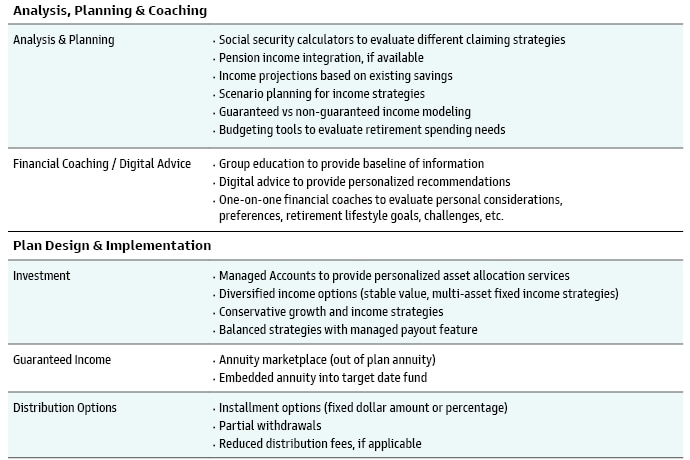
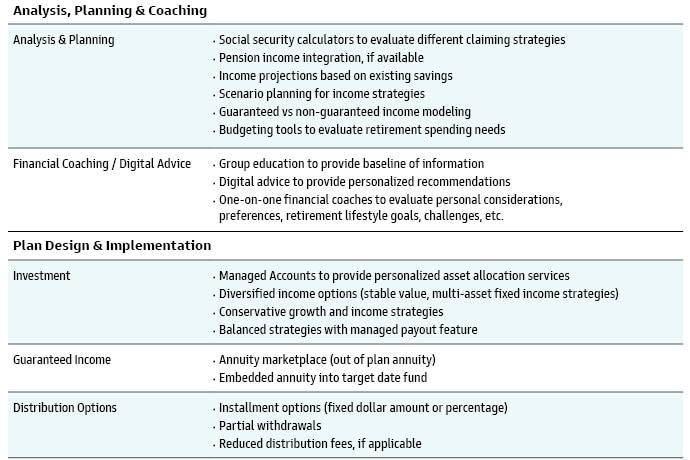
When considering retirement tier plan design enhancements, we believe it is important for participants to have both the resources to plan a personalized retirement income strategy as well as the tools to implement those strategies. Without understanding the options and trade-offs to generate income potential, it may not be possible to make an informed decision about income and spending, especially regarding important or irrevocable decisions such as pension elections or annuity (guaranteed income) purchases.
For informational and illustrative purposes only. Source: Goldman Sachs Asset Management. As of April 2023.
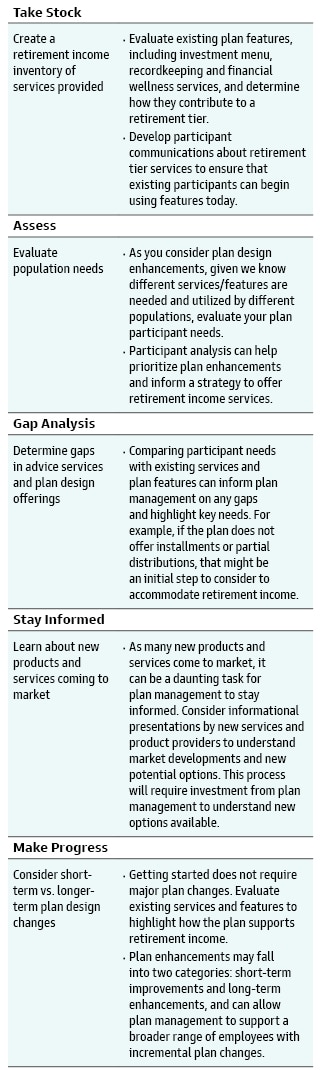
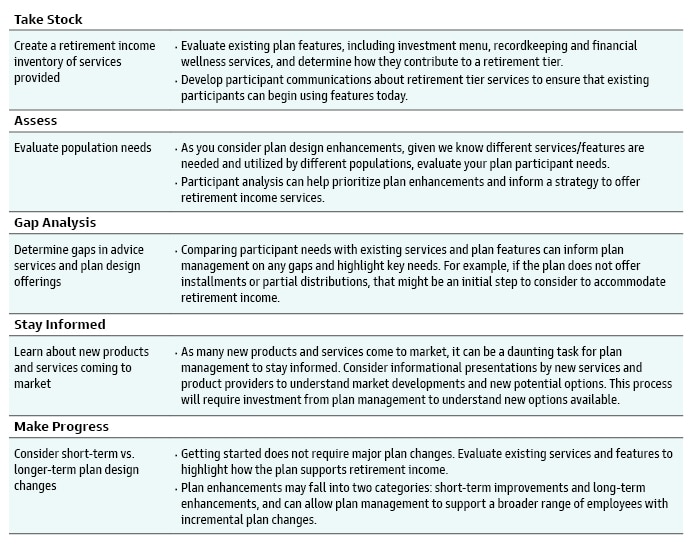
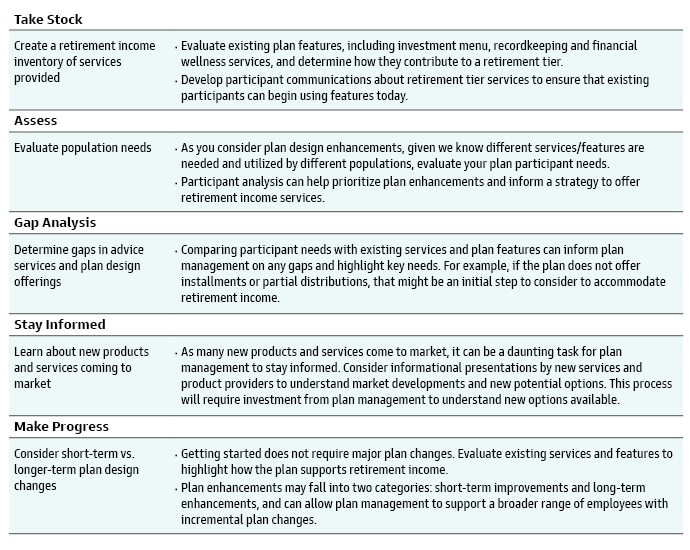
Getting started is often the most difficult part of implementing a retirement tier. Many plans already offer components of a retirement tier. Getting started may be as simple as looking at what you already have.
Source: 2023 Goldman Sachs Asset Management Retirement Survey & Insights Report. Views represent those of survey respondents. Results compiled in August 2023. As of October 2023.
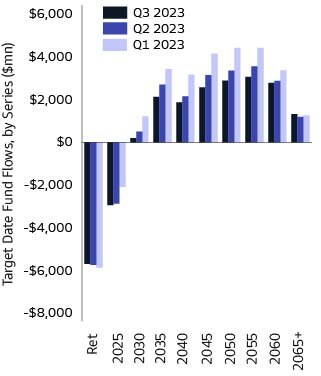
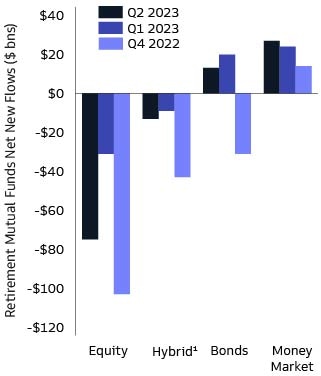
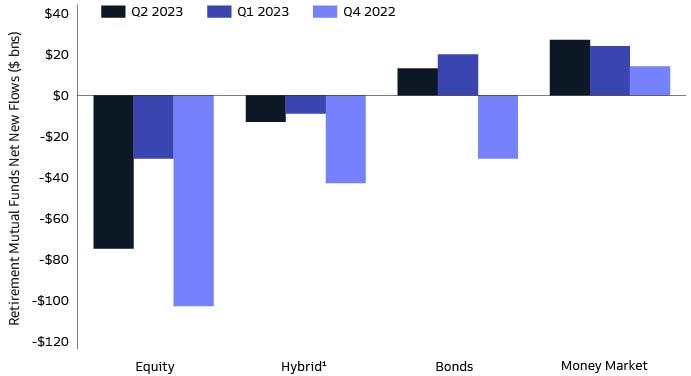
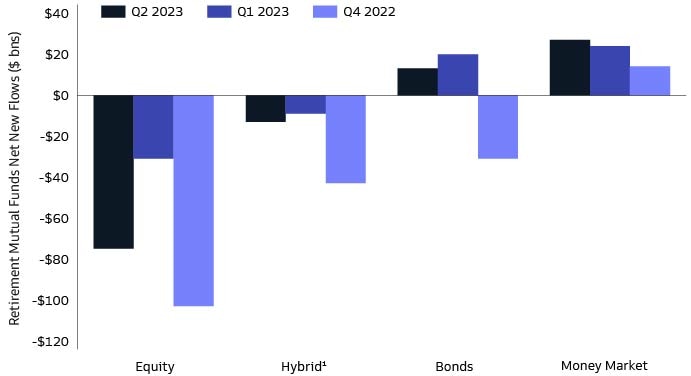
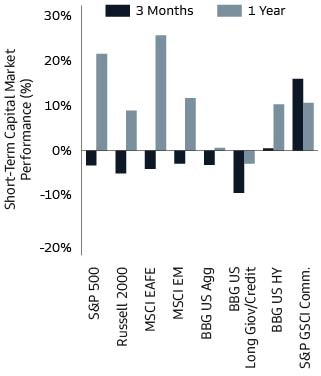
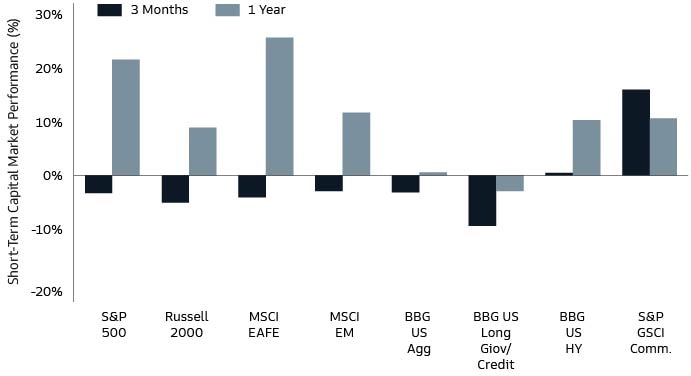
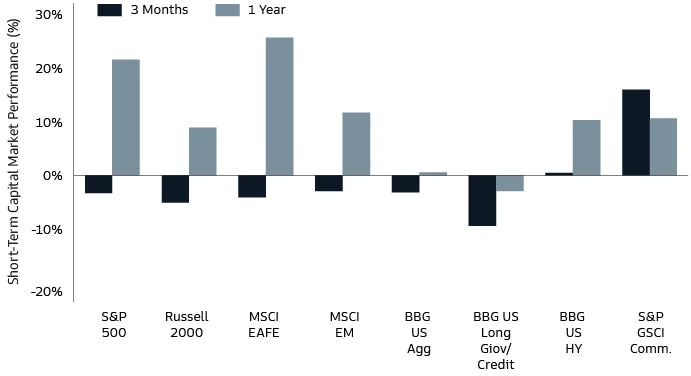
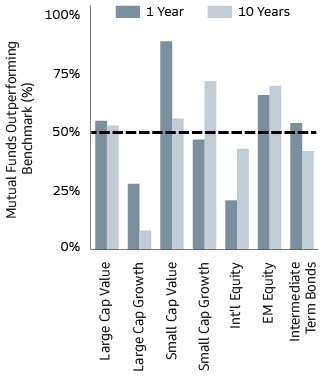
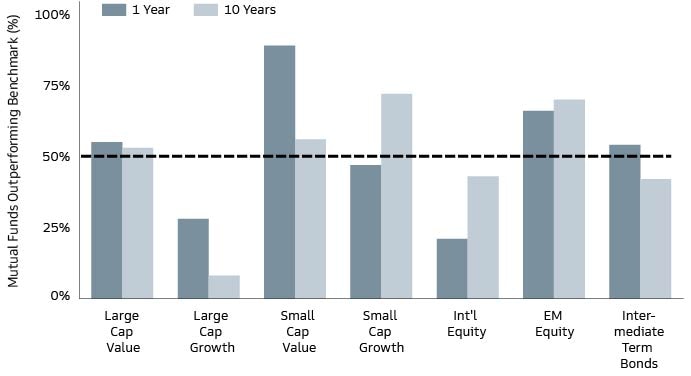
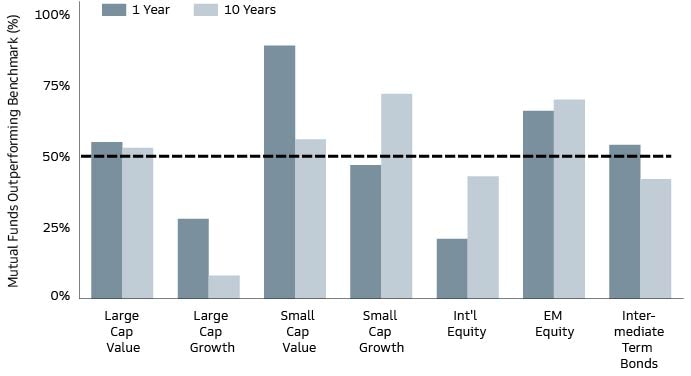
Target date fund (TDF) flows in Q3 were generally lower compared to the prior quarters reported, while plan participants likely continued to seek lower market volatility in money market funds and bonds during fluid market conditions. Returns across asset classes were generally positive over the trailing twelve months, though more challenged in the last quarter. Active managers have outperformed on a relative basis in small cap value and intermediate term bonds categories in the last quarter.
Source: Strategic Insight, Simfund as of 9/30/2023; For open-end mutual funds only.
Source: Goldman Sachs Asset Management analysis of ICI Cerulli Associates Retirement Mutual Fund data reported as of 9/30/2023.
Source: Morningstar, Inc., as of 9/30/2023. Performance is annualized for periods greater than one year. Past performance does not guarantee future results, which may vary.
Source: Morningstar, Inc., as of 9/30/2023. Net of fees, unique share classes only.
Hybrid: hybrid mutual fund is characterized by diversification among two or more asset classes. The funds typically invest in a mix of equity and fixed income products.

Defined Contribution Quarterly 4Q 2023


Committed to providing you with the insights you need to build your practice.
1. Methodology: We evaluate survey responses from both working and retired Americans to understand the realities of preparing for and living in retirement. Our goal is to learn about the financial obstacles individuals need to overcome and lessons that can be applied. Our Retirement Survey & Insights Report includes key findings that we hope will help plan advisors and plan sponsors better prepare employees for retirement. Our findings are from 5,261 individuals surveyed in June-July 2023 and provide insights from a diverse set of perspectives, including (i) working individuals (3,673 working individuals across generations—working Baby Boomers, Generation X, Millennials, and Generation Z), and (ii) retired individuals (1,588 retired individuals age 50-75).
Glossary
A 401(k) plan is an employer-sponsored, tax advantaged retirement savings plan. 401(k)s are largely self-directed: Plan participants decide how much they would like to contribute from their salary, and which investments from among those offered by the plan they would like to invest in.
Active Management refers to an investment approach where managers select investments for a portfolio in an attempt to outperform the benchmark index.
IRA: Individual Retirement Accounts
Volatility is a measure of variation of a financial instrument's price.
IRS: Internal Revenue Service
Risk Considerations
Environmental, Social and Governance (“ESG”) strategies may take risks or eliminate exposures found in other strategies or broad market benchmarks that may cause performance to diverge from the performance of these other strategies or market benchmarks. ESG strategies will be subject to the risks associated with their underlying investments’ asset classes. Further, the demand within certain markets or sectors that an ESG strategy targets may not develop as forecasted or may develop more slowly than anticipated.
Target Date Funds are subject to the risks associated with the underlying funds in which they invest. These risks change over time as the fund’s asset allocation strategy adjusts as it approaches its target date. There is no assurance any target date fund will achieve its investment objective. The principal value of an investment in a target date fund is not guaranteed at any time including at its target date.
Equity investments are subject to market risk, which means that the value of the securities in which it invests may go up or down in response to the prospects of individual companies, particular sectors and/or general economic conditions. Different investment styles (e.g., “growth” and “value”) tend to shift in and out of favor, and, at times, the strategy may underperform other strategies that invest in similar asset classes. The market capitalization of a company may also involve greater risks (e.g. "small" or "mid" cap companies) than those associated with larger, more established companies and may be subject to more abrupt or erratic price movements, in addition to lower liquidity.
International securities may be more volatile and less liquid and are subject to the risks of adverse economic or political developments. International securities are subject to greater risk of loss as a result of, but not limited to, the following: inadequate regulations, volatile securities markets, adverse exchange rates, and social, political, military, regulatory, economic or environmental developments, or natural disasters.
Emerging markets investments may be less liquid and are subject to greater risk than developed market investments as a result of, but not limited to, the following: inadequate regulations, volatile securities markets, adverse exchange rates, and social, political, military, regulatory, economic or environmental developments, or natural disasters.
Investments in fixed income securities are subject to the risks associated with debt securities generally, including credit, liquidity, interest rate, prepayment and extension risk. Bond prices fluctuate inversely to changes in interest rates. Therefore, a general rise in interest rates can result in the decline in the bond’s price. The value of securities with variable and floating interest rates are generally less sensitive to interest rate changes than securities with fixed interest rates.
Variable and floating rate securities may decline in value if interest rates do not move as expected. Conversely, variable and floating rate securities will not generally rise in value if market interest rates decline. Credit risk is the risk that an issuer will default on payments of interest and principal. Credit risk is higher when investing in high yield bonds, also known as junk bonds. Prepayment risk is the risk that the issuer of a security may pay off principal more quickly than originally anticipated. Extension risk is the risk that the issuer of a security may pay off principal more slowly than originally anticipated. All fixed income investments may be worth less than their original cost upon redemption or maturity.
Variable annuities are long-term investment vehicles used for retirement savings. There are fees, expenses, and risks associated with this contract. All guarantees, including death benefit payments are dependent on the claims-paying ability of the issuing company and do not apply to the investment performance or the safety of the underlying investment divisions in the variable annuity. Earnings are taxable as ordinary income when distributed and taxable amounts withdrawn before age 59 1⁄2 may be subject to a 10% federal tax penalty. As with any investment in securities, variable products are subject to investment risks, including the possible loss of principal. Contract and policy values will fluctuate with the performance of the underlying investments such that when redeemed, investor unit values may be worth more or less than their original cost.
All investing is subject to risk, including the possible loss of the money you invest.
Investments in commodities may be affected by changes in overall market movements, changes in interest rates, or factors affecting a particular industry or commodity. Commodities are also subject to social, political, military, regulatory, economic, environmental or natural disaster risks.
Mutual funds are subject to various risks, as described fully in each Fund’s prospectus. There can be no assurance that the Funds will achieve their investment objectives. The Funds may be subject to style risk, which is the risk that the particular investing style of the Fund (i.e., growth or value) may be out of favor in the marketplace for various periods of time.
The above are not an exhaustive list of potential risks. There may be additional risks that should be considered before any investment decision.
General Disclosures
THESE MATERIALS ARE PROVIDED SOLELY ON THE BASIS THAT THEY WILL NOT CONSTITUTE INVESTMENT ADVICE AND WILL NOT FORM A PRIMARY BASIS FOR ANY PERSON’S OR PLAN’S INVESTMENT DECISIONS, AND GOLDMAN SACHS IS NOT A FIDUCIARY WITH RESPECT TO ANY PERSON OR PLAN BY REASON OF PROVIDING THE MATERIAL OR CONTENT HEREIN. PLAN FIDUCIARIES SHOULD CONSIDER THEIR OWN CIRCUMSTANCES IN ASSESSING ANY POTENTIAL INVESTMENT COURSE OF ACTION.
Views and opinions expressed are for informational purposes only and do not constitute a recommendation by Goldman Sachs Asset Management to buy, sell, or hold any security, they should not be construed as investment advice.
Past performance does not guarantee future results, which may vary. The value of investments and the income derived from investments will fluctuate and can go down as well as up. A loss of principal may occur.
THIS MATERIAL DOES NOT CONSTITUTE AN OFFER OR SOLICITATION IN ANY JURISDICTION WHERE OR TO ANY PERSON TO WHOM IT WOULD BE UNAUTHORIZED OR UNLAWFUL TO DO SO.
Prospective investors should inform themselves as to any applicable legal requirements and taxation and exchange control regulations in the countries of their citizenship, residence or domicile which might be relevant.
Goldman Sachs does not provide legal, tax or accounting advice, unless explicitly agreed between you and Goldman Sachs (generally through certain services offered only to clients of Private Wealth Management). Any statement contained in this document concerning U.S. tax matters is not intended or written to be used and cannot be used for the purpose of avoiding penalties imposed on the relevant taxpayer. Notwithstanding anything in this document to the contrary, and except as required to enable compliance with applicable securities law, you may disclose to any person the US federal and state income tax treatment and tax structure of the transaction and all materials of any kind (including tax opinions and other tax analyses) that are provided to you relating to such tax treatment and tax structure, without Goldman Sachs imposing any limitation of any kind. Investors should be aware that a determination of the tax consequences to them should take into account their specific circumstances and that the tax law is subject to change in the future or retroactively and investors are strongly urged to consult with their own tax advisor regarding any potential strategy, investment or transaction.
Although certain information has been obtained from sources believed to be reliable, we do not guarantee its accuracy, completeness or fairness. We have relied upon and assumed without independent verification, the accuracy and completeness of all information available from public sources.
Neither MSCI nor any other party involved in or related to compiling, computing, or creating the MSCI data makes any express or implied warranties or representations with respect to such data (or the results to be obtained by the use thereof), and all such parties hereby expressly disclaim all warranties of originality, accuracy, completeness, merchantability, or fitness for a particular purpose with respect to any of such data. Without limiting any of the foregoing, in no event shall MSCI, any of its affiliates or any third party involved in or related to compiling, computing or creating the data have any liability for any direct, indirect, special, punitive, consequential or any other damages (including lost profits) even if notified of the possibility of such damages. No further distribution or dissemination of the MSCI data is permitted without MSCI’s express written consent.
This material is not intended to be used as a general guide to investing, or as a source of any specific investment recommendations, and makes no implied or express recommendations concerning the manner in which any client’s account should or would be handled, as appropriate investment strategies depend upon the client’s investment objectives.
Any reference to a specific company or security does not constitute a recommendation to buy, sell, hold or directly invest in the company or its securities. It should not be assumed that investment decisions made in the future will be profitable or will equal the performance of the securities discussed in this document.
This information discusses general market activity, industry or sector trends, or other broad-based economic, market or political conditions and should not be construed as research or investment advice. This material has been prepared by Goldman Sachs Asset Management and is not financial research nor a product of Goldman Sachs Global Investment Research (GIR). It was not prepared in compliance with applicable provisions of law designed to promote the independence of financial analysis and is not subject to a prohibition on trading following the distribution of financial research. The views and opinions expressed may differ from those of Goldman Sachs Global Investment Research or other departments or divisions of Goldman Sachs and its affiliates. Investors are urged to consult with their financial advisors before buying or selling any securities. This information may not be current and Goldman Sachs Asset Management has no obligation to provide any updates or changes.
Goldman Sachs does not provide legal, tax or accounting advice, unless explicitly agreed between you and Goldman Sachs (generally through certain services offered only to clients of Private Wealth Management). Any statement contained in this presentation concerning U.S. tax matters is not intended or written to be used and cannot be used for the purpose of avoiding penalties imposed on the relevant taxpayer. Notwithstanding anything in this document to the contrary, and except as required to enable compliance with applicable securities law, you may disclose to any person the US federal and state income tax treatment and tax structure of the transaction and all materials of any kind (including tax opinions and other tax analyses) that are provided to you relating to such tax treatment and tax structure, without Goldman Sachs imposing any limitation of any kind. Investors should be aware that a determination of the tax consequences to them should take into account their specific circumstances and that the tax law is subject to change in the future or retroactively and investors are strongly urged to consult with their own tax advisor regarding any potential strategy, investment or transaction.
Index Benchmarks
Indices are unmanaged. The figures for the index reflect the reinvestment of all income or dividends, as applicable, but do not reflect the deduction of any fees or expenses which would reduce returns. Investors cannot invest directly in indices. The indices referenced herein have been selected because they are well known, easily recognized by investors, and reflect those indices that the Investment Manager believes, in part based on industry practice, provide a suitable benchmark against which to evaluate the investment or broader market described herein.
Bloomberg US Aggregate Bond Index represents an unmanaged diversified portfolio of fixed income securities, including US Treasuries, investment grade corporate bonds, and mortgage backed and asset-backed securities.
Bloomberg US High Yield Index covers the universe of fixed rate, non-investment grade debt.
Bloomberg US Long Government/Credit Index is a broad-based flagship benchmark that measures the non-securitized component of long maturity (10+ years) bonds in the US Aggregate Bond Index. It includes investment grade, US dollar-denominated, fixed-rate Treasuries, government-related and corporate securities.
MSCI EAFE Index is a market capitalization weighted composite of securities in 21 developed markets.
MSCI Emerging Markets Equity Index is a free float-adjusted market capitalization index that is designed to measure equity market performance of emerging markets.
Russell 2000 Index measures the performance of the small-cap segment of the US equity universe. The Russell 2000 Index is a subset of the Russell 3000 Index representing approximately 10% of the total market capitalization of that index. It includes approximately 2000 of the smallest securities based on a combination of their market cap and current index membership.
S&P 500 Index is the Standard & Poor’s 500 Composite Stock Prices Index of 500 stocks, an unmanaged index of common stock prices.
S&P GSCI Commodity Index is a composite index of commodity sector returns, representing an unleveraged, long-only investment in commodity futures that is broadly diversified across the spectrum of commodities.
Confidentiality
No part of this material may, without Goldman Sachs Asset Management’s prior written consent, be (i) copied, photocopied or duplicated in any form, by any means, or (ii) distributed to any person that is not an employee, officer, director, or authorized agent of the recipient.
Date of First Use: October 17, 2023.
Compliance code: 338463-OTU-1893567.
