


Menu Our services in the selected location:
  • No services available for your region.
Select Location:
Remember my selection
Your browser is out of date.
MARKET KNOW-HOW 
|
3Q 2023

MARKET KNOW-HOW | 3Q 2023

Overcoming Inertia


Market Know-How 3Q 2023

Much like a dampener is used to remove energy from mechanical systems, tight financial conditions have been the tool utilized by central banks to slow global growth. Dampeners of growth have diverged as 1) monetary policy cycles have varied in response to regional inflation, and 2) credit tightening has emerged as a potentially powerful drag in some economies. Their uncertain impacts have left many investors sitting idly by as opportunities in risk assets feel few and far between.

With that said, markets seem to be pricing the best of all worlds—inflation moderating, policy rates falling, and recessions evaded. Still, seemingly more room to the downside than upside has made entry points difficult to identify, driving a flight to cash-equivalents. While attractive, the yield provided in ultra-short fixed income may be fickle, and kicking the can down the road on strategic allocations could prove costly for investors.

Objects at rest will remain as such unless acted on by an external force. Similarly, portfolios will remain unbalanced if strategic implementation is put off. Signals as to when to apply that force rarely align perfectly for investors. But in our view, they might not need to, as regional divergence has presented a diverse opportunity set to position across asset classes.

In this edition of the Market Know-How, we explore how investors may invest strategically in a post-monetary tightening regime, with emphasis on:

  • Increasing the frequency of loss-harvesting via tax-advantaged SMAs to drive bottom-line tax savings.
  • Solving for various investor needs with high yield municipal bonds, particularly as technicals may turn more favorable.
  • Active selection within emerging market equities, which are set to potentially benefit from a consumer-led earnings recovery.

Macro & Market Views


Economic Resilience

Global economies have shown a high tolerance for restrictive conditions relative to past cycles. In our view, limited financial imbalances in the private sector and de-levered households have been important starting points contributing to this macro strength. Without a clear impetus of a growth shock, market pricing may gradually begin to reflect current economic data if growth sustains and core rates inch higher. Still, regional nuances are extensive—slower policy rate transmission, strong wage growth, and consumer recovery dictate the international landscape.

Source: Goldman Sachs Global Investment Research and Goldman Sachs Asset Management. As of June 13, 2023. “Real GDP” refers to Gross Domestic Product adjusted for inflation, year-over-year. Real GDP growth forecasts sourced from Goldman Sachs Global Investment Research. “A” refers to actual. “E” refers to expected. The economic and market forecasts presented herein are for informational purposes as of the date of this publication. There can be no assurance that the forecasts will be achieved. Please see additional disclosures at the end of this publication. Past performance does not guarantee future results, which may vary.
View Less
Outlook
Tax-Advantaged SMAs: Making Taxes Less Taxing

More Frequent Tax-Loss Harvesting May Create Bigger Opportunities

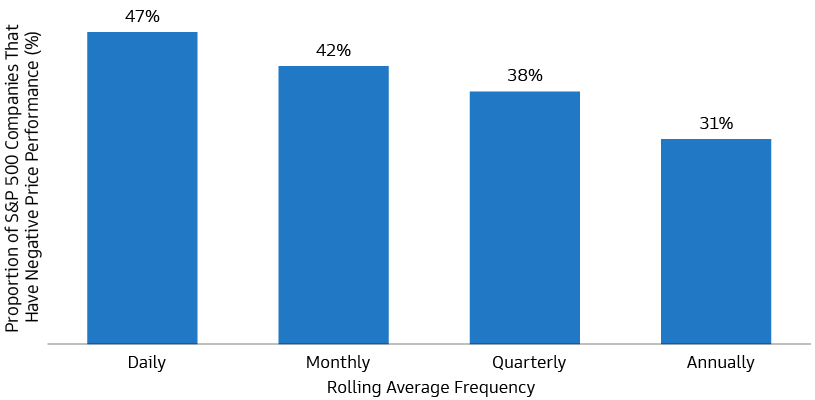
Few investors capitalize on market volatility as often as they should. On average, only 31% of S&P 500 company stock returns end a rolling year negative. In contrast, nearly half of S&P 500 stock prices end a single trading day negative. We believe investors who tax-loss harvest only once a year will likely miss out on substantial opportunities to generate losses to offset capital gains. Admittedly, daily tax-loss harvesting may not be required, or even preferred. Instead, we believe the ability of tax-advantaged SMAs to tax-loss harvest as frequently as needed provides more robust opportunities for tax alpha, especially given recent wide dispersion of returns.


Source: Bloomberg and Goldman Sachs Asset Management.


Solutions
Tax-Advantaged SMAs: More Money, Fewer Problems

Dividend Reinvestment Is a Start, But a Little Cash Goes a Long Way

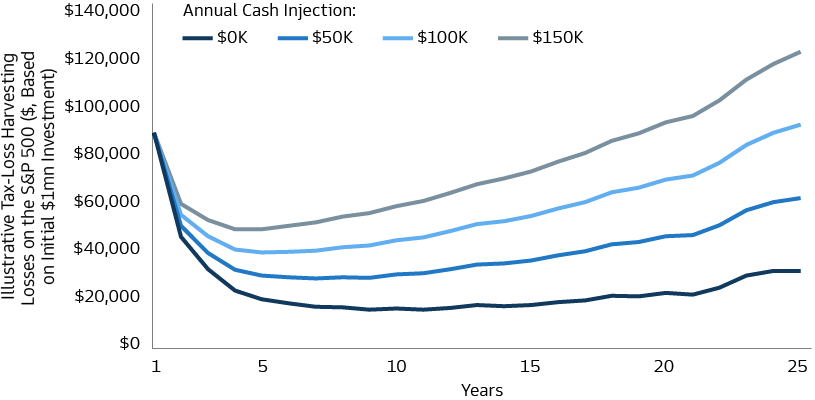
We believe tax-loss harvesting via tax-advantaged SMAs should be treated like a core equity allocation. Investors who reinvest dividends may be able to generate capital losses for decades, but annual capital contributions can substantially extend the viability of harvesting losses. For instance, a $1mn initial investment in a tax-advantaged SMA with just $50k in additional capital contributions (or 5% of the initial investment) each year might double the realized losses available after 25 years, relative to the same $1mn with no additional contributions. Greater annual contributions can theoretically extend tax-loss harvesting opportunities into perpetuity, potentially providing access to fresh cost bases even as market prices trend higher.


Source: Goldman Sachs Asset Management.

VIEW LESS DISCLOSURE
Outlook
High Yield Municipal Bonds: Understood, But Likely Under-Owned

Solving for Many Needs

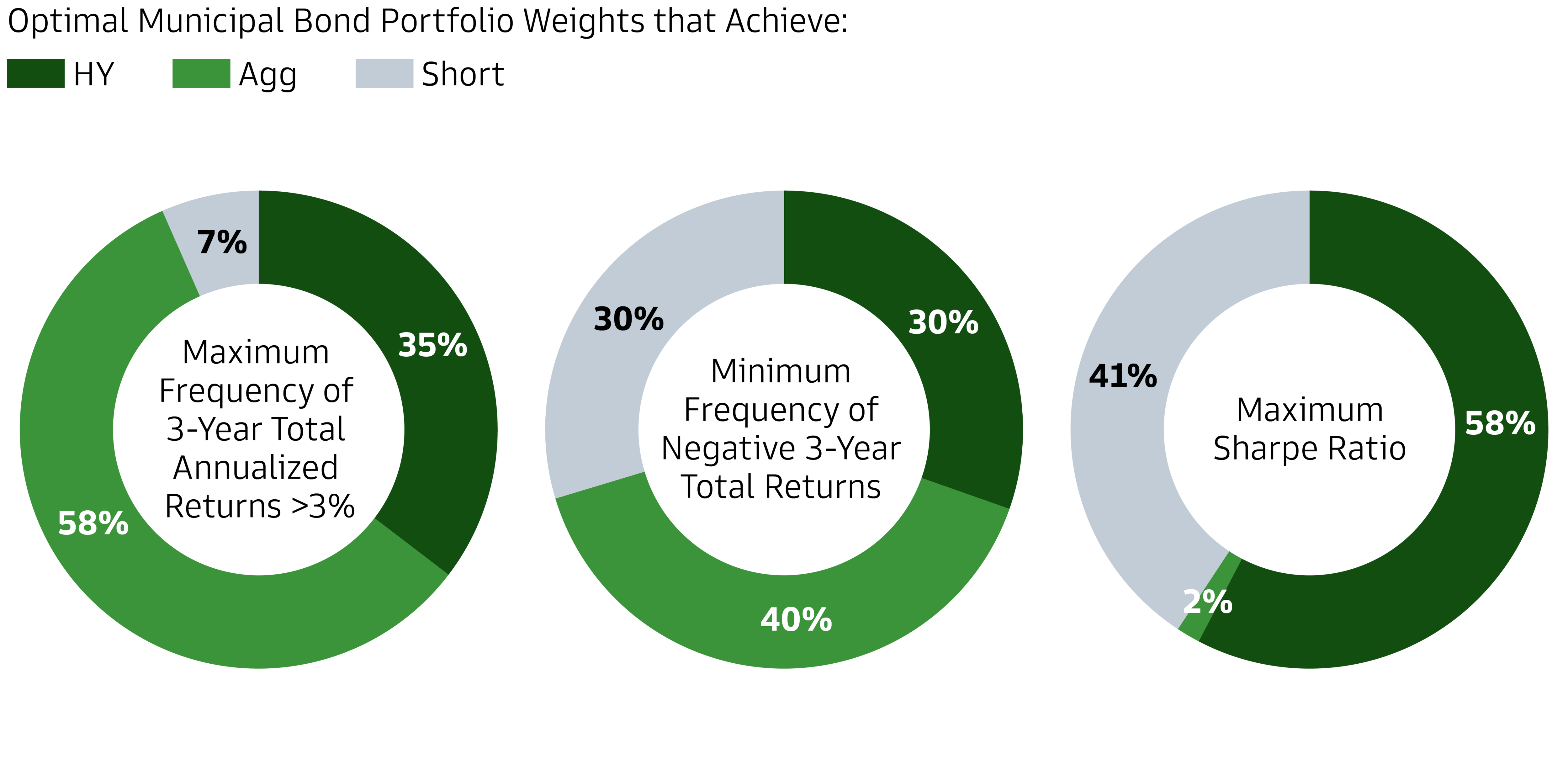
Few asset classes may solve for as many investor needs as effectively as high yield munis. We observe that optimal municipal bond portfolios seeking maximum frequency of strong returns, minimum frequency of negative returns, or maximum Sharpe ratio all merit significant high yield weights. Compared to high yield corporates, municipal counterparts historically default less frequently, and yet they offer greater current tax-equivalent yields. We also believe that high yield munis can remain resilient through the entire economic cycle, warranting that investors consider a strategic allocation in portfolios. While the precise weight likely differs for each investor, one general observation is the potential benefit of more.


Source: Bloomberg, and Goldman Sachs Asset Management.


Solutions
High Yield Municipal Bonds: If Not Now, When?

High Time for High Yield

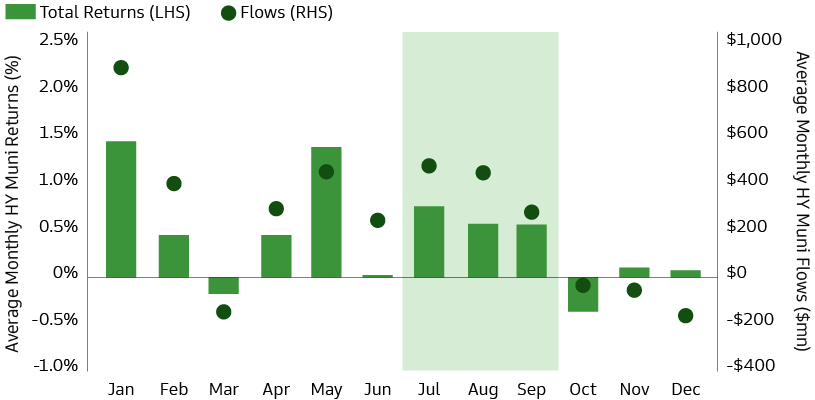
We believe now is the time for high yield munis, with the summer redemption season historically providing a technical tailwind. Muni returns cannot be viewed independently of flows, which are likely set to return to the market after a disappointing 1H 2023 and historically weak 2022. Considering a more stable interest rate environment, muted new issue supply, and continued fundamental strength, high yield munis may offer returns competitive with what can typically be expected in the equity market. In our view, high yield munis should be considered a core part of portfolios, with the current moment offering a particularly attractive entry point.


Source: Strategic Insights, Simfund, Bloomberg, and Goldman Sachs Asset Management.

VIEW LESS DISCLOSURE
Outlook
Emerging Market Equities: Weapon of Mass Consumption

Right Type of Earnings

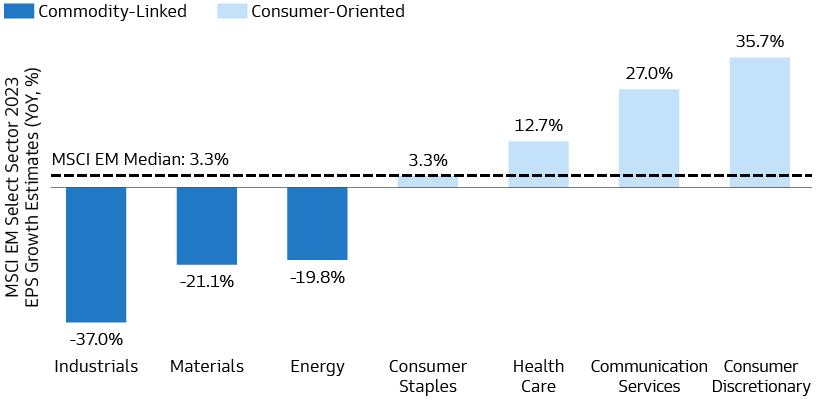
Drivers of emerging market (EM) equity performance should soon shift from a sentiment-driven rebound to a bifurcated earnings recovery, in our view. We believe consumer-oriented sectors, generally with sound businesses and durable profits, are poised to benefit from ~$1.1tn of excess savings put into motion by Chinese consumers. Ultimately, consensus expects 2023 earnings in these sectors to grow by 22.7%, on average. Meanwhile, commodity-linked sectors are expected to post an average decline of -19.9%. Strong spending, specifically in services categories, should lift employment and income expectations and consequently strengthen economic recovery for EM countries.


Source: Bloomberg and Goldman Sachs Asset Management.


Solutions
Emerging Market Equities: Getting In On the Ground Floor

I-P-Ohh Yeahh

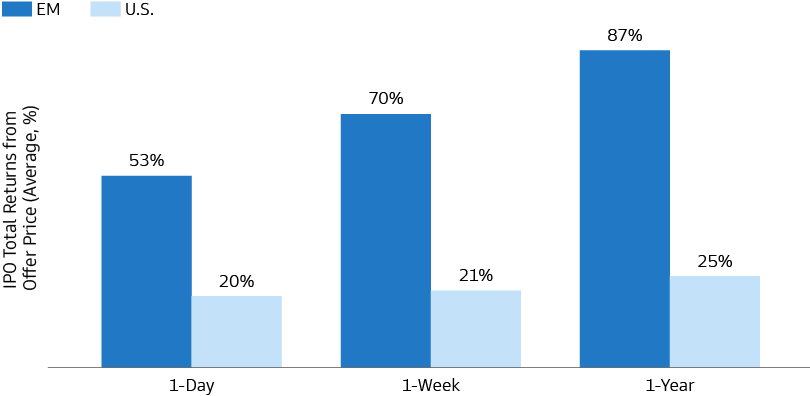
Initial public offerings (IPOs) in EM may unlock substantial return upside, and accessing them at the offer price has been paramount. EM companies that went public between 2016 and 2022 returned an average of 53% from offer price to first close, comprising almost two-thirds of the first year’s return in just one day. This initial pop has historically been 33pp greater than that experienced in the US market. First-year returns have also outpaced newly-issued US equities by 3.5 times. In our view, access to EM IPOs requires actively looking outside of index memberships—the number of public companies has grown, but index providers are slow to reflect them in common benchmarks.


Source: Bloomberg and Goldman Sachs Asset Management.

VIEW LESS DISCLOSURE

Stay Informed and Be Ahead of the Curve


DOWNLOAD MARKET KNOW-HOW

Access the PDF to use with your clients

SUBSCRIBE TO MARKET KNOW-HOW

Get the latest Market Know-How delivered to your inbox as soon as it publishes

MANAGE SUBSCRIPTIONS

Related Market Strategy


CONTACT US

For More Information
Broker/Dealers
Independents/RIAs
Retirement Services
Client Service
A & C Shares
Institutional Shares